Today I welcome Bobbie Pyron to Best Dog Books, a blog that features interviews with authors who’ve written a canine story for kids or young adults. Bobbie is here to talk about A PUP CALLED TROUBLE which is a middle grade novel published by Katherine Tegen Books for kids aged 8 and up.
Best Dog Books: Who is your key dog character(s) and what kind of dog is he/she?
The main character in A PUP CALLED TROUBLE is actually an overly curioius, young coyote!
Best Dog Books: What is A PUP CALLED TROUBLE about?
Trouble lives with his coyote family in the wilds of New Jersey. Trouble has a nose for, well, trouble which is why his mother named him that. Through a series of curiousity-fueled events, Trouble finds himself lost in the “wilds” of downtown New York City and has no idea how to get back to his home. With the help of several unlikely friends-a smart-alacky crow named Mischief, a sensitive opossum named Rosebud, and a poetry-loving poodle named Minette-Trouble tries his best to return to his family.
Best Dog Books: What inspired you to write this story?
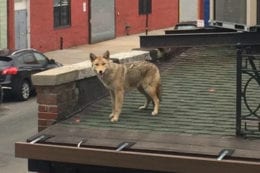
Quite a few years ago, I saw a news story on national news about a coyote running loose in downtown New York City. I (like probably a lot of people) wondered what in the heck a wild coyote was doing in the city! I started reading about urban coyotes. Turns out they’re everywhere! Not long after that, I visited NYC for the first time. I was overwhelmed by the skyscrapers, the masses of people, and the lack of trees and nature. I kept thinking about that coyote while I was there. On the flight home, I started writing his story.
Best Dog Books: What was the biggest challenge you had writing this story?
The biggest challenge I had was making it believable that Trouble would consider not returning to the forest but staying in Central Park with his new friends. I needed to add that layer of conflict and uncertainty to the story line. But at the same time, I knew if I were a coyote, there’s no way I’d want to stay in a city!
Best Dog Books: What is your next story? Will there be a dog character?
Although right now, I can’t say what my next story will be, you can always expect a dog to be in it, even if the story isn’t about a dog.
Best Dog Books: Is there anything you’d like to share about this book that we haven’t covered?
There’s a great section at the end of the book called Critter Notes that you must read! It has all kinds of fascinating information about not only coyotes but also crows and opossums. I promise you’ll never look at any of these three creatures the same after reading the facts about them.
Best Dog Books: What was the first book that made an impact on you?
The first book that made an impact on me was CASEY THE UTTERLY IMPOSSIBLE HORSE. It was the first chapter book I read entirely by myself and I was so proud! It opened a whole new world of possibility for me!
Best Dog Books: What advice can you give writers?
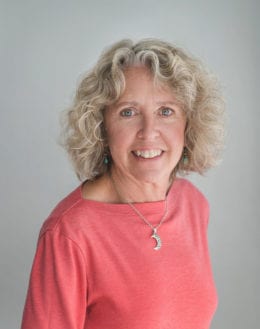
Don’t get too focused on the publication end of things—getting an agent or editor. Just enjoy the journey and creative process of writing, creating a world and people (even if they’re actually animals) out of the wonder of your imagination. Once you get published, you will never be so free again to write what you want to write, the way you want to write.
If you’d like to learn more about Bobbie Pyron, you can check out the author’s website or follow the author on facebook or twitter. You can also find book reviews on her website.
Thank you, Bobbie Pyron for joining us at Best Dog Books. We look forward to reading your book!
Welcome to Best Dog Books, Kate! Tell us about your key dog character, Buddy in your series, Dog Diaries? What is your story about?
KATE: This is the true story of Buddy, (born Kiss), a German shepherd who was the first ever guide dog. Buddy is born into the Swiss kennels of Dorothy Eustace, an American heiress and visionary who bred and trained German shepherds to serve as guide dogs to the blind. Buddy is paired with Morris Frank, a brash young blind American volunteer. Together, dog and man prove to a skeptical world that with the aid of a properly trained guide dog, the blind can live active, dignified, and independent lives. Morris and Buddy helped Dorothy and her trainer establish The Seeing Eye, the first school to train guide dogs and their human partners.
What inspired you to write this story?
KATE: When I was a little girl, my aunt Lockie lived in Morristown, New Jersey, home of the Seeing Eye, the first school in America for training guide dogs. She took me to see a demonstration. The dogs were so intense and focused and impossible to distract. I will never forget the tour guide saying that what separated guide dogs from your average whip-smart trained dog was that these dogs were trained to disobey if it was a matter of their master’s safety. If a dog could make that kind of independent judgment, I thought, what couldn’t a dog do?
What was the biggest challenge you had writing your story? How did you overcome it?
KATE: I’m not a dog and I’m not blind so a great deal of imagination and empathy was required. Like Morris, I enlisted my senses. Like Buddy, I was steadfast and stuck to my story.
What kind of story can we expect next from you? Is it about a dog? If so, what is it about?
KATE: I’m currently doing research on the 6th of the Dog Diaries series, about Sergeant Stubby. Sergeant Stubby was the most decorated dog of World War I. He served 18 months “over there” and participated in seventeen battles on the Western Front. He saved his regiment from surprise mustard gas attacks, found and comforted the wounded, and even once caught a German spy by the seat of his pants. Back home his exploits were front page news of every major newspaper. He was a terrier/bull mix and just about the cutest, noblest beast I’ve ever seen. My editor, Alice Jonaitis, has pictures of dogs hanging on her office door, her own and others. I just sent her a pin-up of Sergeant Stubby. What a guy!
Can you remember the first book that made an impact on you? And why?
KATE: Anna Elizabeth Bennet’s Little Witch was the first novel I read independently and I loved it. Mynx, the daughter of a witch, is a misfit. She doesn’t want to be a witch. As a second-grade misfit who did not want to be seen in pubic with my eccentric family, I identified big time with this little girl who longed for normalcy.
Thank you, Kate Klimo and good luck with this series! We look forward to featuring and reading more of these books on Best Dog Books.
I’d like to welcome one of my very dear friends and Vermont College advisor, Marion Dane Bauer to join us today on Best Dog Books. She is probably the single most person who has helped me grow as a writer. Whenever I start a story, I ask myself the same questions that Marion asks herself before she starts a new story. These questions let me know if I have a story and give me a road map to follow as I write. As an MFA advisor, her guidance was logical and clearly articulated. Execution was always the challenge.
Best Dog Books: What is the title of your book? Pub date and publisher?
Marion: Little Dog, Lost, May 1, 2012, Atheneum
Best Dog Books: Who is your key dog character?
Marion: My key dog character is a mutt named Buddy. She is a “little black dog with brown paws/and a brown mask/and a sweet ruffle of brown fur on her bum/just beneath her black whip of a tail./Satiny coat./Ears like airplane wings/ that drop/ just at the tips.” Once Buddy owned a boy, but when the boy and his family have to move to the city, she is given away. The woman she is given to is kind enough, but she doesn’t know anything about dogs. And there Buddy’s tale begins.
Best Dog Books: Tell us about your story.
Marion: A lost dog longs for her boy, but her boy is gone. Another boy longs for a dog, but when he asks, his mother always says “No.” An old man longs for something, anything to give his life meaning again. They all come together–in fact the whole town comes together–in a moment of sweet resolution.
Best Dog Books: Here are some great reviews.
Kirkus, Starred Review
Little Dog, Lost
By Marion Dane Bauer and illustrated by Jennifer A. Bell
(Atheneum; ISBN: 9781442434233; May 2012; Summer catalog)
When her loving family—especially the boy who kisses her on the lips—moves to the city, Buddy is re-homed with a clueless though kind woman while a dog-loving boy yearns for a mutt of his own. Long, thin lines of free-verse text scroll invitingly down the mostly white pages. This tender, engaging effort economically captures the winsome attitude of Buddy, whose “ears like airplane wings” now sag. She spends her days peering through her new owner’s fence, watching despondently for her missing boy and finally resolving to go find him. Mark, who lives in the same town, feels his life is empty without the dog he desperately needs but his mother won’t permit. And there is shy Charles Larue, the aging caretaker of a nearby mansion, who spends his lonely days waiting for something—anything—to bring meaning to his life. How these three needy creatures will come together is predictable but wholly satisfying nonetheless. Bauer describes the little dog joyfully chasing a ball: “She rose and rose / as though her hind legs were springs, / as though her front ones were wings.” The description just as aptly captures the heartening nature of this attractive tale, which is enhanced with Bell’s pleasant black-and-white illustrations. A perfect selection for pet lovers new to chapter books and anyone who just enjoys a cheerful dog story.
BOOKLIST, Starred Review
Issue: June 1, 2012
Little Dog, Lost.
Bauer, Marion Dane (Author) , Bell, Jennifer A. (Illustrator)
May 2012. 240 p. Atheneum, hardcover, $14.99. (9781442434233).
A stray on the streets of the small town of Erthly, little dog Buddy remembers her happy bond with a boy, whose family moved away to a city apartment where there was no room for Buddy. Then Buddy’s new owner shooed her out, and she left, “head low, / tail tucked, / airplane ears sagging.” But Buddy is not the only stray in Erthly who is lonely and lost: “So many lives / filled / with longing.” There is Charles Larue, a shy, reclusive caretaker of a mansion. Does he have a dark secret? And then there is Mark, a young boy whose father took off before he was born, who desperately wants a dog and falls instantly, helplessly in love with Buddy, feeling “the snuffle of warm breath / against his palm.” But Mark’s mother, who is mayor of Erthly, says no to a dog. The town kids want a dog park, and they organize a rally to support their cause, but can Mark confront his mom? Illustrated with occasional, expressive black-and-white drawings, mostly from Buddy’s viewpoint of the world from the ground up, the rapid, immediate free verse will grab readers with first the longing and loneliness and then, in contrast, the boy and dog in bliss.
Great for sharing with pet lovers.
— Hazel Rochman
Best Dog Books: What inspired you to write this story?
Marion: The idea actually began with the form. I wanted to write a story that would work for younger readers as well as those in the middle grades. I also wanted a way to approach it that would be less limiting in terms of vocabulary and sentence length than the work I had done specifically for younger readers. I wondered if writing in verse would give me the range and flexibility I was looking for. I have always felt . . .well, cautious about novels in verse, but after finding a couple of them I really liked, I decided to try verse for this new story. And a dog and a boy and a small town seemed the perfect place to start. I discovered Charles Larue, the old man in the story, along the way. I found Fido as I wrote, too, a wonderful, dog-dominating cat who gives the story a special energy.
Best Dog Books: What was the biggest challenge you had writing your story? How did you overcome it?
Marion: My first and biggest challenge was to gather my confidence about writing in a form I had never attempted–or even wanted to attempt–before. Eventually, though, I settled into it, learning to work with rhythm and lyrical language exactly as I do when writing a picture book. In this case a long, long picture book. Once I gathered the confidence I needed, I had more fun with this story than any other I have written.
Best Dog Books: What other YA/MG books have you written? Do any of them feature a key dog character? If so, which ones? What are these stories about?
Marion: Little Dog, Lost was my 85th book to be published, so I have written quite a few middle-grade and young-adult novels. Dogs were important characters in my very first novel, Shelter from the Wind, and a dog is the title character in The Golden Ghost, but my other animal stories are about wild animals, wolves (Runt) or a bear, (A Bear Named Trouble).
Best Dog Books: What kind of story can we expect next from you? Is it about a dog? If so, what is it about?
Marion: The story I’m working on now is a young-adult novel called Blue-Eyed Wolf. It is set in 1967-68 and is about two things, the destruction of the wolves in northern Minnesota and my main character’s loss of her older brother who enlists and goes off to fight in Vietnam. When I’ve finished this one, though, I intend to go back to the town of Erthly and to the dog park and to the dogs and to Fido and to build another story there.
Best Dog Books: Can you remember the first book that made an impact on you? And why?
Marion: I remember so many books from my childhood, but animal stories held a special magic for me. Felix Salten, the author of Bambi and Fifteen Rabbits, was my favorite author. I would read his books as fast as I could and then nearly burst into tears when I came to the last page because there was no more to read.
Thank you for joining us at Best Dog Books, Marion! I look forward to your next book about a blue-eyed wolf and will certainly invite you back to share more about it when it comes out. Another great story by Marion that everyone should read is Runt. A perfect example and study on how to write plot.
For more information about Marion Dane Bauer, please check out her author website and follow her blog.
Happy holidays! Today I welcome Gennifer Choldenko to Best Dog Books, a blog that features interviews with authors who’ve written a canine story for kids or young adults.
Best Dog Books: What is the title of your book? Pub date and publisher? Genre? Targeted age group? Illustrator?
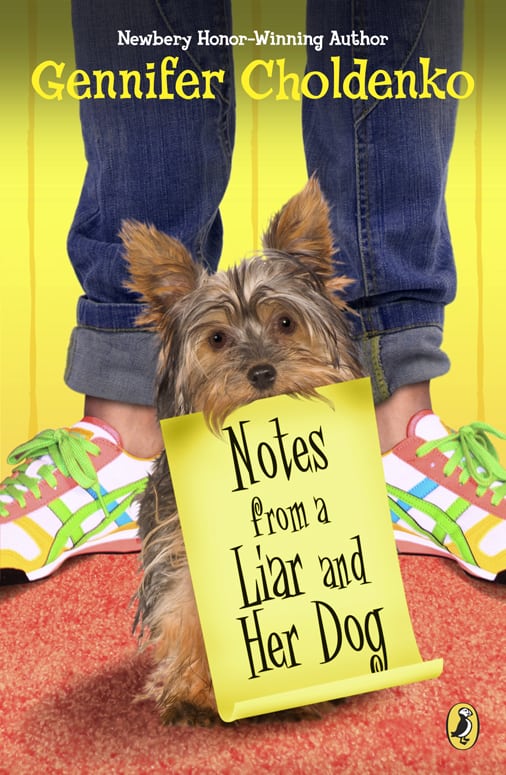
Notes from a Liar and Her Dog
Penguin Books for Young Readers
Publication date: 2001
Penguin Books for Young Readers
Realistic Fiction
Age Range: Third grade to Adult
Best Dog Books: Who is your key dog character(s) and what kind of dog is he/she? Feel free to list as many different breeds or mixes as necessary. Tell us a little more about him/her.
Pistachio has morphed a bit over the years. He was a tiny, old, sickly part Chihuahua. But alas when they gave the novel a new cover a few years ago, he became significantly cuter. One thing that remains the same about Pistachio is he is a little dog with a big dog complex. He weighs less than a loaf of bread but is always ready to take on every monster dog around.
Best Dog Books: In 70 words or less, provide a succinct plot description of your story.
Antonia MacPherson, the middle child of three sisters, loves her dog Pistachio but she doesn’t think she loves anyone else. Ant has a habit of telling lies when the truth “gets in her way.” Ant’s only close human friend is Harrison, a boy who loves to draw chickens. But things begin to change when a loving teacher named Just Carol takes Ant and Harrison under her wing.
Best Dog Books: What inspired you to write this story?
I don’t really know where this novel came from. One night I couldn’t sleep, so I got up and started writing in Ant’s voice. I am nothing like Ant. I’m not the middle child. I’m not a liar. My family was nothing like Ant’s. Where did she come from? The only thing I can think of is I was feeling annoyed at my brother at the time. In my family of origin he can do no wrong. My brother is the nicest man in the world so this kind of makes sense. That said, I have to admit it’s no fun being the sibling of a saint.
Best Dog Books: What was the biggest challenge you had writing your story? How did you overcome it?
The big challenge of this novel was writing an ending which I felt was satisfying. I wrote the last chapter 5 or 6 different ways. (Given the way I rewrite now, that seems like nothing. But at the time it felt over the top.) The novel was due, I had to figure out something so I sent my editor the three best final chapters and said “Help!” She picked the ending she thought was the closest and then I worked more on it and eventually it began to sink into the manuscript in a way that felt right.
AOB: What other YA/MG books have you written? Do any of them feature a key dog character? If so, which ones?
What are these stories about?
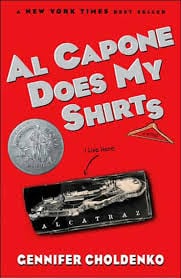
Al Capone Does My Shirts – 2005 Newbery Honor book
Al Capone Shines My Shoes
Al Capone Does My Homework – NEW!!
If a Tree Falls at Lunch Period
No Passengers Beyond this Point
The Al Capone books take place on Alcatraz Island in 1935 and 1936 when Al Capone was a prisoner there and the families of the guards lived on the island. These books are historical fiction and I try whenever possible to stick to the facts. The real Warden did not allow dogs on the island, so no dogs in those books. A dog plays a very important role in No Passengers Beyond this Point however.
Best Dog Books: What kind of story can we expect next from you? Is it about a dog? If so, what is it about?
No dog in my next novel. The Monkey’s Secret will be out in Spring 2015. I can’t tell you much about it because . . . yes, you guessed it . . . it’s a secret.
Best Dog Books: What else would you like us to know about you or your story?
I volunteered at the Oakland Zoo for a year to research Notes from a Liar and Her Dog. I worked with a keeper who had been at the zoo for 17 years. Mostly I picked up camel poop and cleaned snake windows.
Best Dog Books: Wow! What an interesting and unexpected fact re your work at the Oakland Zoo. I remember the first time I met you and was in awe of the research you did for the Al Capone books being a docent and getting access to the documents.
Best Dog Books: Can you remember the first book that made an impact on you? And why?
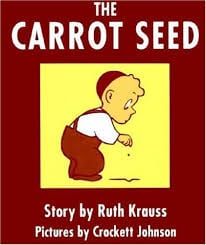
The very first book? The Carrot Seed. That was the first book I ever read. I believed I was the main character. He was telling my story.
The first novels I remember loving? Charlotte’s Web, The Little Princess, Charlie and the Chocolate Factory, Harriet the Spy, The Oz books, Island of the Blue Dolphins, Across Five Aprils, The Lion the Witch and the Wardrobe . . . etc.
Best Dog Books: I’ll have to look that book [The Carrot Seed] up. I’ve never heard of it, but noted it down.
Best Dog Books: What advice would you give to aspiring writers?
Be kind to yourself. Maintain a regular writing routine. Enjoy the process. Read everything that fascinates you.
AOB: Where can readers go to find out more information about you and/or your books?
Thank you Gennifer Choldenko for joining us at Best Dog Books! You’ve been gracious with your time. I’d love to have you come back for your book No Passengers Beyond this Point.
Best Dog Books is a blog that features children’s books with key dog characters. Sometimes an adult dog book sneaks in but for the most part Best Dog Books aims to help kids, their parents, teachers, and librarians find dog books.
From the publisher:
Bone is a stray dog, all alone in the world, looking for a safe place to call home. Charlie is devastated by the death of his older brother, but at least he has his brother’s dog to comfort him. All Henry wants is a dog of his own, and even when his best friend moves away, his parents still won’t let him have one. Bone, Charlie, and Henry don’t know each other, but their lives are about to connect in a very surprising way. Because dogs, and dog lovers, have a way of finding each other . . .

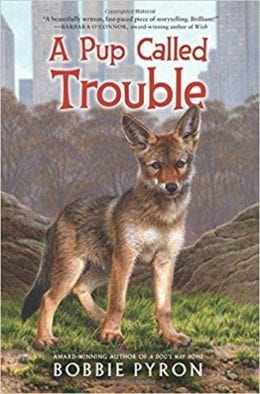 Today I welcome Bobbie Pyron to Best Dog Books, a blog that features interviews with authors who’ve written a canine story for kids or young adults. Bobbie is here to talk about A PUP CALLED TROUBLE which is a middle grade novel published by Katherine Tegen Books for kids aged 8 and up.
 Best Dog Books: What inspired you to write this story?
 Best Dog Books: What was the biggest challenge you had writing this story?
 Best Dog Books: Is there anything you’d like to share about this book that we haven’t covered?
 Best Dog Books: What advice can you give writers?
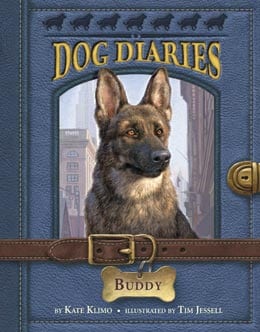 Welcome to Best Dog Books, Kate! Tell us about your key dog character, Buddy in your series, Dog Diaries? What is your story about?
 What kind of story can we expect next from you? Is it about a dog? If so, what is it about?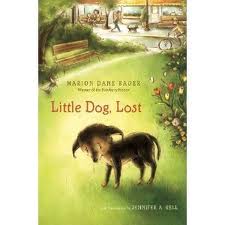

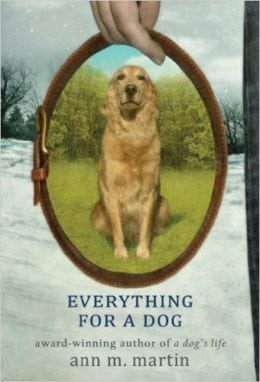 Best Dog Books is a blog that features children’s books with key dog characters. Sometimes an adult dog book sneaks in but for the most part Best Dog Books aims to help kids, their parents, teachers, and librarians find dog books.