Guest Blog from Christine Dowd: How Animals Reveal Character in Children’s and Young Adult Fiction

How Animals Reveal Character in Children’s and Young Adult Fiction

by Christine Dowd
513ErdVVimL._AA220_So many children’s novels illustrate the powerful bond between the protagonist and his or her animal companion that I could not possibly begin to name them all. But the sheer number of them illustrates how popular they are with children. Incorporating animal companions into your novels can add depth and dimension to your stories. By fully using animals in your stories to reflect your characters’ emotions, you can deepen the emotional impact on your reader and provide a lens through which your reader can glimpse the true nature of your characters.

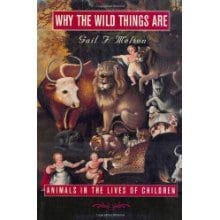
411qNMM6ztL._AA220_In Gail E. Melson’s book, Why the Wild Things Are: Animals in the Lives of Children, Melson states that animals are, “crucial to the human imagination and to the successful passage of children through adolescence and into adulthood.”

In his book, Animals in Young Adult Fiction, Walter Hogan states that, “The process of growing to mature adulthood can be enormously enriched by attentive interactions with the animals, both wild and domesticated, that populate the adolescent’s world and await his discovery.” (Hogan 217)

In Lara’s Gift, by Annemarie O’Brien and in Where The Red Fern Grows, by Wilson Rawls, the animals depicted serve not merely as companions for the central characters, but as a mirror reflecting them, a means of revealing them, and illuminating something essential about them as individuals. Fully used by the author, the animals depicted in these novels also propel the characters into action that leads the protagonist to self- discovery. Thus, the animal companion serves as the catalyst to change in the characters.

While I focus on two novels that involve dogs, any animal, even a fantasy creature, can work well in children’s and teen literature to reveal your characters.
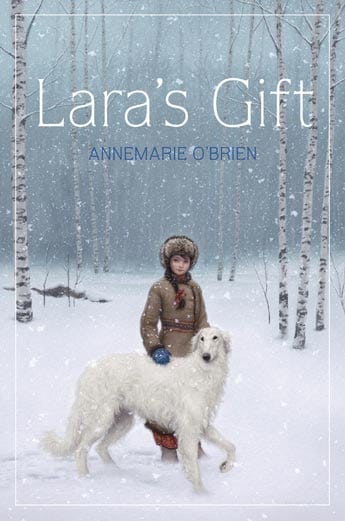
BOOK-COVER-HIGH-RES-LarasGiftIn Lara’s Gift, Lara’s beloved dog, Zar, serves as a mirror reflecting Lara’s determined spirit. Lara’s dream is to follow in her father’s footsteps and be kennel steward for the raising of Borzoi hunting dogs worthy of the Tsar. But in pre-revolutionary Russia, this position is traditionally passed down from father to son. When Lara’s mother gives birth to a baby boy, Lara sees her dream of being kennel steward slip away.

Lara knows that if she is ever to be kennel steward, she must first experience the hunt, but both Lara and her dog Zar are equally disadvantaged. Zar is excluded from the hunt because he is the runt of the litter, and Lara because she is a girl. Both must prove themselves capable and worthy.

The following passage shows Lara’s determined spirit through Zar.

“With my shoulders back, my chin up, and Zar at my side, I harnessed my most serious, grown-up voice. Tyatya, now that I’m fourteen, take me on a wolf  hunt. Teach me what I need to know.” Zar pawed at my leg and goosed me with his long snout. “Zar’s ready too.”

“Hunting’s a man’s world.” Papa extended an outstretched arm over Borei, Bistri, and Sila. “With fine, fast, powerful dogs like these three.”

“Zar’s likely to be just as fine, if given the chance,” I said. “Don’t forget that Borei, Bistri, and Sila are his littermates.” (O’Brien 19)

Zar’s action of goosing Lara mirrors her own persistence.  Both sense the excitement around the hunt, because it is in their blood, even though the other characters in the novel do not see this yet.

Further into the novel, we see the symbiotic relationship between Lara and Zar when they must both climb onto the old mare, Babushka’s back. This is not a particularly important moment in the novel, as the important action has just taken place, yet the author uses it to deepen our knowledge of character.

It is critical when hunting wolves for the dogs to be able to leap onto a horse’s back. This passage shows Zar’s determination as well as Lara’s, as Zar struggles to get onto the mare.

Alexander tightened his hold on Babushka’s reins and  repeated the hand signal. She snorted and pawed the ground with her hoof, before eventually obeying.

“You can do it, Zar!”

This time, Zar took a few steps backward, and then in one leap, he landed square on Babushka’s rump, carrying his head high. Once he was settled, Alexander raised his hand and Babushka stood up. With his fingers locked together, Alexander held them out for me as a human ladder. “Your turn.”

“I, too, must do it by myself,” I said. (O’Brien 32-33)

In this scene, Lara and Zar mirror one another in their  eagerness to prove themselves.

Both Lara and Zar have similar plot lines. Lara must take risks just as Zar, as the runt, must prove himself worthy of the hunt. Zar is limited by his size just as the protagonist is limited by her position in society. 

But Zar’s presence in Lara’s life propels Lara into action.  Alexander, the count’s son and Lara’s friend, convinces Lara’s father to allow Zar to participate in the hunt. Lara sneaks onto the sled without anyone knowing.

Zar ultimately proves to be a superior hunter, as Lara proves capable of handling the hunt. Part of Lara’s growth as a character involves the pain of letting Zar go, despite her love for him. But it is she who decides to send Zar to Tzar Nicholas as a gift, and this action shows the reader her true inner strength and proves her worthy of her dream. Both girl and dog also mirror one another at the novel’s end as they are both changed when Lara’s father declares Lara kennel steward, despite tradition, and Zar evolves into the prize of his litter, proving himself a superior hunter, despite his size.
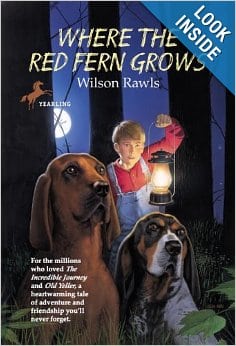
51QWK0WB8KL._SY344_PJlook-inside-v2,TopRight,1,0_SH20_BO1,204,203,200_We see a similar theme of determination in Where The Red Fern Grows. Through hard work, and perseverance, ten-year-old Billy, the son of a poor farming family in the Ozarks, saves enough money to make his dream come true of owning dogs to hunt coons with.

But while “Old Dan,” and “Little Ann” are Billy’s beloved hunting dogs, they also serve to reveal a great deal about Billy as a character.

Like Lara in Lara’s Gift, determination is a major theme that is echoed throughout the novel-it is determination that earns Billy his dogs. The author shows Billy’s determination through Billy’s actions, but reinforces this trait in Billy through Billy’s dogs. Like Billy, his dogs never give up on the hunt, no matter how challenging. Even Little Ann, much smaller than Old Dan, displays perseverance in treeing the coons.

While the novel depicts Billy’s love for his dogs, the dogs serve the larger purpose of revealing his character. They propel Billy to surmount more and more difficult challenges that test his perseverance, and the perseverance of his dogs.

Two scenes exemplify this well:

When Billy is attacked by a group of bullies in town as he is returning home with his pups, he fights back after one of the boys hurts one of his pups.

Freckle face pulled the ear of my little girl pup. I heard her painful cry. That was too much. I hadn’t worked two long hard years for my pups to have some freckle-face punk pull their ears. Swinging the sack from my shoulder, I walked over and set it down in a doorway. As I turned around to face the mob, I doubled up my fist, and took a Jack Dempsey stand.

Freckle-face said, “So, you want to fight.” He came in swinging.

I reached way back in Arkansas somewhere. By the time my fist had travelled all the way down to the Cherokee Strip, there was a lot of power behind it. Smack on the end of Freck’s nose it exploded. (Rawls 39-40)

This passage reveals Billy’s tenacity. Though outnumbered, Billy does not back down. Towards the novel’s end, this earlier scene is echoed when Old Dan and Little Ann save Billy’s life by fighting a mountain lion. Billy tells us,

I never saw my dogs when they got between the lion and me, but they were there. Side by side, they rose up from the ground as one. They sailed straight into those jaws of  death, their small red bodies taking the ripping, slashing claws meant for me. (Rawls 226)

Old Dan fights until Billy has to pry his jaws from the lion. Like Billy with the bullies, Old Dan and Little Ann never back down, even though they are no match for the lion any more than Billy is a match for the bullies.

Billy’s dogs sacrifice themselves for Billy just as Billy sacrifices himself for his dogs. Through the death of Old Dan and shortly after, Little Ann, as in their hunting adventures, the dogs enable Billy to move forward. In life, his dogs propelled him to become a better hunter. In death, they help him move forward in his life, better equipped as a result of having experienced love and the pain of loss.

In a literal sense, the dogs function to propel Billy to action that in turn enables his growth. On a metaphorical level, they reflect and echo his characteristics. The red fern that grows between his dogs’ graves is a great symbol that goes beyond character traits. The red fern represents the sacredness of the bond between Billy and his dogs, since, according to Cherokee legend, only an angel can plant a red fern.

When you consider the numerous accounts about heroic dogs that have rescued people, or that have served as service dogs for the blind, or the military, it’s no wonder that they have made their way so prevalently into our fiction. The countless books written about dogs are a testimony to the important role they play in our lives and the lives of our children. Dogs remain an eternal symbol of loyalty and friendship.

UnknownWhile there are hundreds of great quotes about dogs, this one by Max de Pree really struck me:

“We are alone, absolutely alone on this chance planet: and amid all the forms of life that surround us, not one, excepting the dog has made an alliance with us.”

If you intend to use an animal in your fiction, think about how you can make that animal reflect your characters in a meaningful way and in so doing, give your reader a deeper insight into them. There are innumerable ways in which to do this effectively. Do it your way.
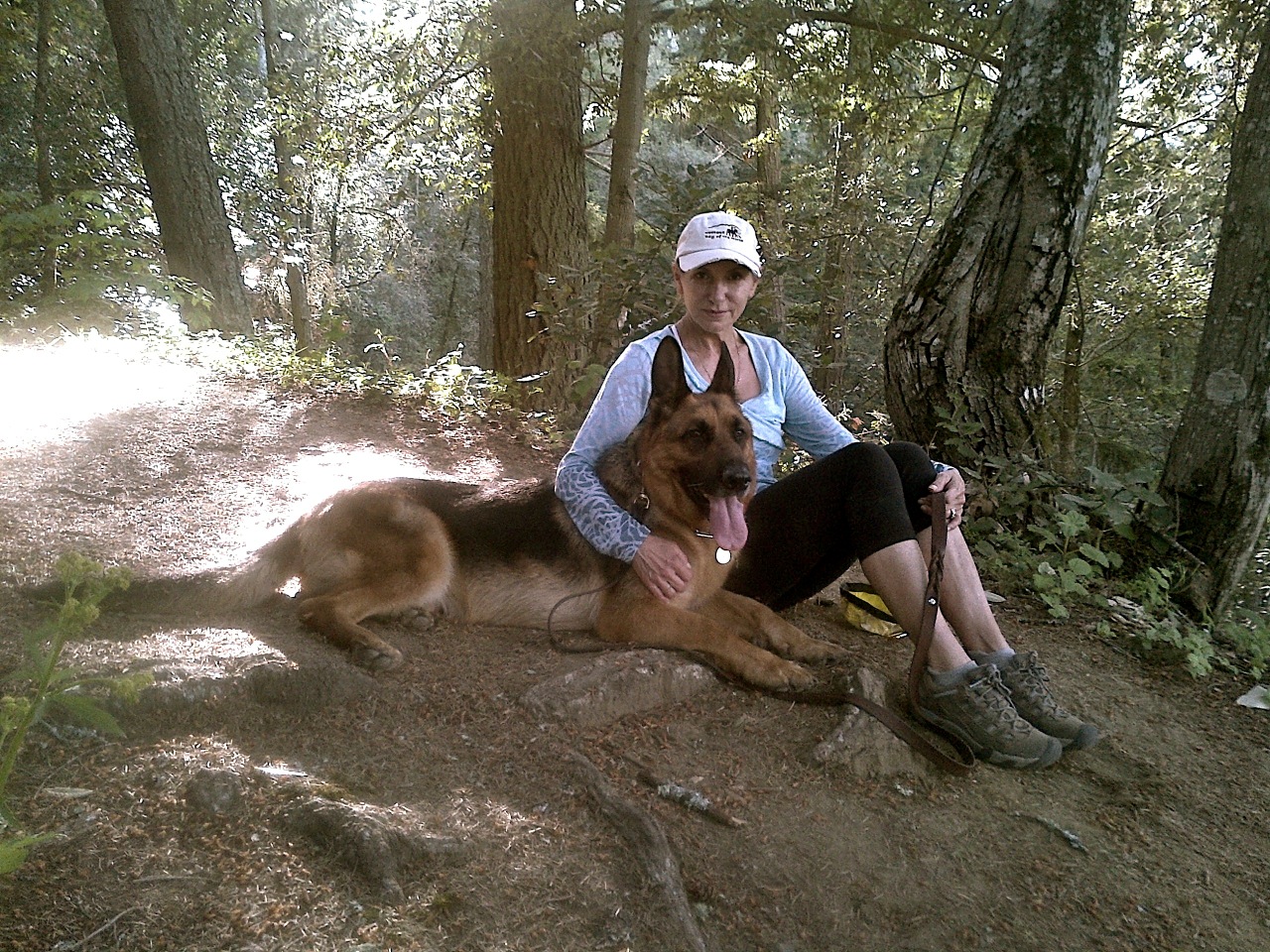
Image Christine Dowd is a graduate from the Vermont College of Fine Arts Writing for Children and Young Adults Program. She loves to read fantasy, has a killer story waiting to be published, and enjoys hiking in the hills of California with her dog, Romeo.

Thank you, Christine Dowd for sharing some of your thoughts from your graduate lecture at Vermont College of Fine Arts. We look forward to reading about Orion, your magical horse and the journey Astrea makes with him to realize her dreams.


For great books about dogs, check out 101 Best Dog Books for Kids.

For published authors and unpublished authors, check out our writing contests.
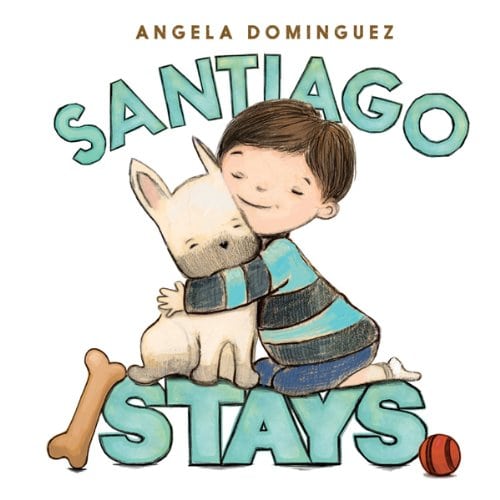
best dog books – Q & A with Angela Dominguez: SANTIAGO STAYS

Angela Dominguez Santiago Stays Book coverToday I welcome Angela Dominguez to Best Dog Books, a blog that features interviews with authors who’ve written a canine story for kids or young adults.

AOB: What is the title of your book? Pub date and publisher? Genre? Targeted age group? Illustrator?

Santiago Stays. September 3rd, 2013. Fiction. Abrams/Appleseed. Ages 2-5.

AOB: Who is your key dog character and what kind of dog is he/she? Tell us a little more about him/her.

The key character is a French bulldog by the name of Santiago. He is a stubborn little dog who will not budge or move despite any temptation.

AOB: In 70 words or less, provide a succinct plot description of your story.

*Santiago is a typical French bulldog who will not budge despite being offered a variety of temptations by his owner, a little boy. The boy’s frustration eventually boils over which wakes up the boy’s little sister. Suddenly, the reader realizes that Santiago was in reality acting noble and guarding the baby. The story concludes with the boy and his dog playing together with the baby in a final joyous scene.

ANG4Links to reviews or blurbs you wish to share:

Review

Booklist Review:

Santiago is a French bulldog with fur so thick around his chin that it looks like he has a beard. He also is pretty stubborn. When his boy tells him to come, Santiago holds his ground; temptations in the form of treats and toys don’t work either. But when the new baby cries, well, then Santiago goes into protective mode and gets off the green rug to make sure she is all right. This is simple in every way—and simply delightful. Dominguez uses wide swaths of white space as a background often for just two items: Santiago and whatever bribe the boy is offering. The pencil, marker, ink, tissue paper, and digital color pictures have an effortless feel, but there’s emotion in them as well, as the boy gets more frustrated with Santiago’s truculence. The satisfying ending is marked by a cute dog-hugs-boy piece of spot art on the endpapers. The book’s brevity and simple word usage make this a good choice for kids learning to read.

— Ilene Cooper

AOB: What inspired you to write this story?

* I had created a French bulldog character for my portfolio. When I met with Appleseed, the publisher encouraged me to write a story about the character and we came up with a rough plot line in their office.

AOB: What was the biggest challenge you had writing your story? How did you overcome it?

* It’s a very simple story. I had the premise and character quickly, but arriving at a gratifying conclusion took a few months of rewrites.

UnknownAOB: What other YA/MG books have you written? Do any of them feature a key dog character? If so, which ones? What are these stories about?

* I’ve written Let’s Go, Hugo! Which is the story of bird who lives in Paris who is afraid to fly. In addition, I also wrote Maria Had A Little Llama, which is an adaptation of Mary Had A Little Lamb with Peruvian Twist.

AOB: What kind of story can we expect next from you? Is it about a dog? If so, what is it about?

* I have a story about a mother and daughter called Yarn coming out in January 2015 (Dial). That book will feature a little Chihuahua based on my childhood pet.

AOB: What else would you like us to know about you or your story?

* I based the characters on me and my brother.

AOB: Can you remember the first book that made an impact on you? And why?

* There are a few but one of the ones that really stand out is True Story of the Three Little Pigs. I adored the humor and it was the first book that I felt understood me.

bioAOB: Where can readers go to find out more information about you and/or your books?

Web page

Facebook

Twitter

BLOG

Thank you Angela Dominguez for joining us at Best Dog Books! We will be sure to invite you back to talk about Yarn in January 2015.


For other great books about dogs, check out 101 Best Dog Books for Kids.

For published authors and unpublished authors, check out our writing contests.
best dog books – Q & A with Barbara O’Connor: HOW TO STEAL A DOG

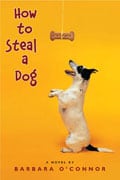
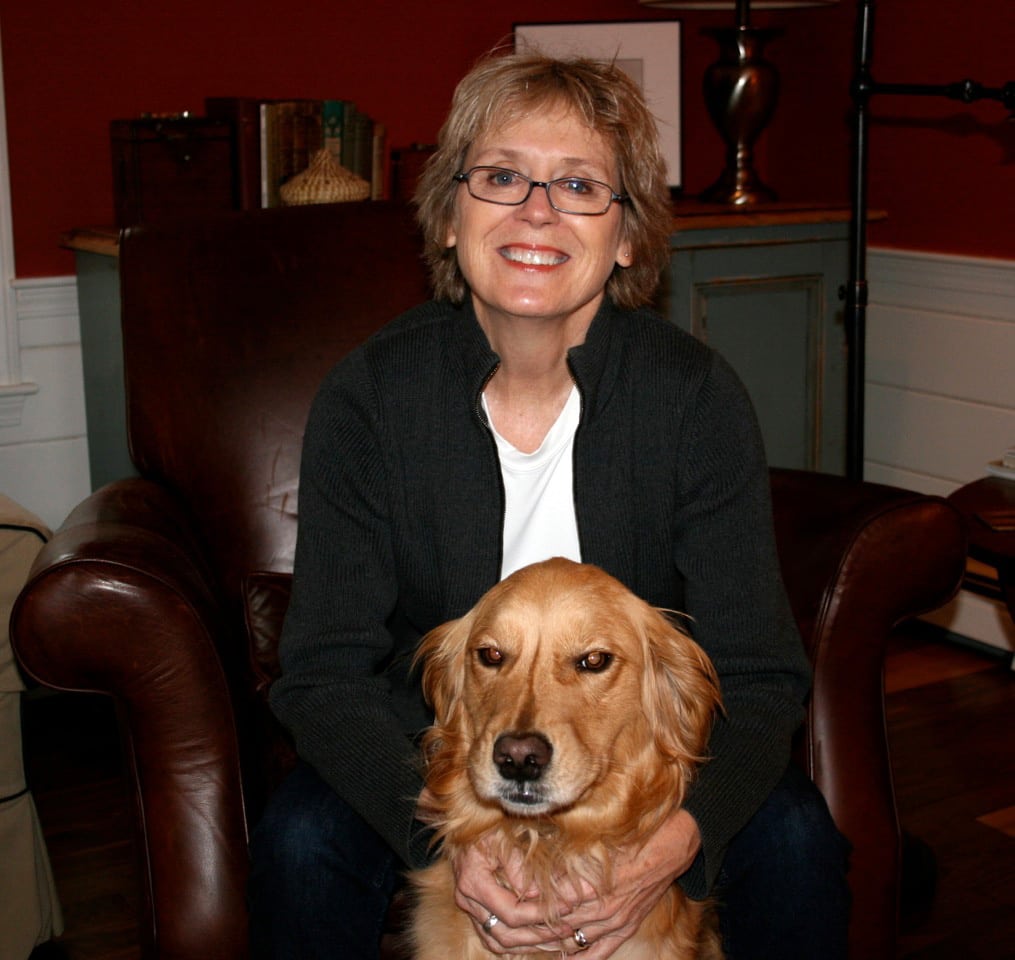
bk_stea2I’d like to welcome Barbara O’Connor today at Best Dog Books, a blog that features interviews with authors who have written a dog book for kids.

AOB: What is the title of your book? Pub date and publisher? Genre? Targeted age group? Illustrator?

How to Steal a Dog; Farrar, Straus, Giroux/Frances Foster; 2007; Ages 8-12; realistic fiction

AOB: Who is your key dog character and what kind of dog is he/she? Tell us a little more about him/her.

The dog is a Jack Russell terrior named Willy. When I first wrote the manuscript, the dog was just a shaggy little black mutt. But the publisher found a photo of a Jack Russell that they wanted to use for the cover, so I changed the description of the dog in the manuscript.

AOB: In 70 words or less, provide a succinct plot description of your story.

Georgina Hayes is desperate. Ever since her father left and they were evicted from their apartment, her family has been living in their car. With her mama juggling two jobs and trying to make enough money to find a place to live, Georgina is stuck looking after her younger brother, Toby. And she has her heart set on improving their situation.When Georgina spots a missing-dog poster with a reward of five hundred dollars, the solution to all her problems suddenly seems within reach. All she has to do is “borrow” the right dog and its owners are sure to offer a reward. What happens next is the last thing she expected.

OConnorAOB: Reviews or blurbs you wish to share:

*ALA Book Links Lasting Connections 2007
Bank Street College Best Books of the Year 2007
Cooperative Children’s Book Center Choices 2008
International Reading Assoc Notable Books for a Global Society 2008
NCSS-CBC Notable Trade Book in the Field of Social Studies 2008
Parents Choice Recommendation 2007 
School Library Journal Best Books of the Year 2007

Winner of Indiana, Kansas and South Carolina Children’s Book Awards

AOB: What inspired you to write this story?

*All my books start with the title and the first line, very often without knowledge of the story. That was the case with this book. The first line is: The day I decided to steal a dog was the same day my best friend, Luanne Godfrey, found out I lived in a car.

I have no idea why the main character of Georgina presented herself to me as being homeless, but I took that on as a challenge and, of course, it served as the foundation for the storyline.

hd_bocAOB: What was the biggest challenge you had writing your story? How did you overcome it?

*The biggest challenge was definitely portraying homelessness in a realistic, yet sensitive way. Part of dealing with that was simply being a human being – that is, imagining myself as a little girl living in a car. Where would I keep my stuff? How would I do my homework? How would I bathe and wash my hair? How would it affect my friendships and activities?

photo06_thumbBut I also needed for the situation to be believable. After I finished the first draft, I researched rural homelessness. I was surprised to learn that the majority of the homeless in rural areas are single, working women with children. And it was eye-opening to see the statistics on the number of homeless, school-aged children in rural areas. I also learned that many of those homeless do not seek help from outsiders, family members or social services. I had, then, portrayed Georgina’s mother in a realistic fashion: a single mother working two jobs but still unable to provide shelter for her children.

AOB: What other YA/MG books have you written? Do any of them feature a key dog character? If so, which ones? 

*I adore dogs so I almost always put one or two of them in my books. None of my other books features a dog as prominently as How to Steal a Dog, but they all have them. My most recent novel, On the Road to Mr. Mineo’s, is a multiple viewpoint story. One of the viewpoints is “the little brown dog.”

The dog, Boo, plays a small role in The Small Adventure of Popeye and Elvis, as do the dogs in The Fantastic Secret of Owen Jester.

AOB: What kind of story can we expect next from you? Is it about a dog? If so, what is it about?

*No dogs in my next project. It’s still in the very early stages, so I can’t say too much about it (because I don’t know too much about it). But I can say that I’m trying a slightly different format by incorporating short stories into the body of the manuscript.

AOB: What else would you like us to know about you or your story?

*Since How to Steal a Dog was published in 2007, I’ve heard from many teachers who have told me about homeless students in their classrooms and/or how much the story generated important discussions about homelessness. The book was even featured on the Nightly News with Brian Williams as a book that resonated with students in the same tough situation as Georgina. When I wrote her story, I never could have imagined that the economy would take such a downturn and that so many young readers would find themselves relating to her situation so much. I hope the book helps children understand the plight of homelessness and how much it affects all of us, maybe even the student sitting next to you in school.

photo03_thumbAOB: Can you remember the first book that made an impact on you? And why?

*I give Missing May by Cynthia Rylant credit for changing the course of my writing career. I was floundering a bit, trying to find my unique voice. When I read Missing May, I realized how much I connected to her voice and how much her voice was tied to setting. It was obvious that Rylant knew and loved those mountains of West Virginia. That’s when I knew that I wanted to set my stories in the South, where I grew up, and where my heart’s home still is.

AOB: Where can readers go to find out more information about you and/or your books?

*www.barbaraoconnor.com

Thank you for joining us today at Best Dog Books, Barbara O’Connor.

For other great books about dogs, check out 101 Best Dog Books for Kids.

For published authors and unpublished authors, check out our writing contests.

*Kirkus STARRED REVIEW List of Best Dog Books

When I was a kid, I was on a constant hunt to find a good dog book to read. I wasn’t always successful. That’s why I created this blog, Best Dog Books. I hope this site will become a go-to resource for kids, parents, teachers, and librarians on a quest for a good dog book.

By no means is this list an exhaustive list of dog books that have earned a starred review from Kirkus. If you know of other dog books that should be on this list, please feel to reach out to me with titles and I’ll be happy to include them on Dog Reads. As I include new titles, I’ll update this list. So feel free to check back as often as you’d like.

For a quick and easy reference, the list is in alphabetical order by title.

Click on the title and it will bring you to the Kirkus Review. Click on the author’s name and it will direct you to the Best Dog Res interview.

Kirkus Starred Review List of DOG BOOKS:

A Dog Called Homeless by Sarah Lean

Lara’s Gift by Annemarie O’Brien

Little Dog, Lost by Marion Dane Bauer

Mountain Dog by Margarita Engle

Summer of the Wolves by Polly Carlson-Voiles

The Dogs of Winter by Bobbie Pyron


For other great books about dogs, check out 101 Best Dog Books for Kids.

For published authors and unpublished authors, check out our writing contests.

 

best dog books – Q & A with Jennifer Ziegler: ALPHA DOG

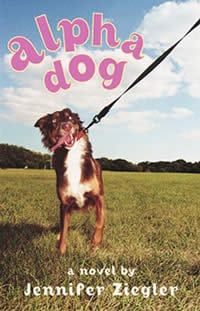
alphadogI’d like to welcome Jennifer Ziegler today at Best Dog Books, a blog that features interviews with authors who have written a dog book for kids.

AOB: What is the title of your book? Pub date and publisher? Genre? Targeted age group? Illustrator?

Alpha Dog, Random House/Delacorte Press, 2006

AOB: Who is your key dog character and what kind of dog is he/she? Tell us a little more about him/her.

* Seamus is a dog of mixed pedigree that was rescued from a shelter by Katie, the teen protagonist in Alpha Dog. Seamus is curious, lively, not at all trained.

AOB: In 70 words or less, provide a succinct plot description of your story.

* Seventeen-year-old Katie looks forward to her summer college-prep program, where she can get away from her domineering mother and jerk ex-boyfriend. While there, Katie adopts an adorable mutt, Seamus, thinking she has found a loyal friend. Unfortunately, Seamus barks, chews up her roommate’s belongings, and chases the landlady’s cat. As Katie gradually gains control of her pet, she discovers she can be the “alpha dog” with other people in her life.

JennReviews or blurbs you wish to share:

* “A breezy first novel about learning to lead the pack…. Dog lovers will likely chuckle over the canine misadventures, including puppy chewing and barking…. Fans of teen romance will probably enjoy this romp with a likable heroine.”

Publishers Weekly

*“A charmingly humorous romp. Dog lovers will like it, but other readers will speak for it, too.”

Booklist

*“[Alpha Dog is] a rare and wonderful kind of first novel – one that is both sweet and powerful.”

ParentWise Magazine

*A 2007 Teddy Children’s Book Award finalist.


AOB: What inspired you to write this story?

* Alpha Dog was inspired by my late, great doggie, Cutter — a stray I adopted when I was living on my own for the first time and could barely take care of myself.  My editor, the wonderful Stephanie Lane Elliott, shaped the story a lot.

The story deals with a life lesson that I took a little too long to figure out: that standing up for yourself does not make you selfish. Sometimes when you take the lead, both you and your relationships are the better for it.

notpopularAOB: What was the biggest challenge you had writing your story? How did you overcome it?

* Cutter, who inspired the story and the character of Seamus, died while I was writing the book. He was 17, so it was not unexpected, but it still came as a shock. I had to take time to grieve. After a few weeks when I couldn’t bear to look at the story, I sat one day and was re-inspired. In fact, it became a source of comfort.

AOB: What other YA/MG books have you written? Do any of them feature a key dog character? If so, which ones? AOB: What are these stories about?

* HOW NOT TO BE POPULAR (2008) – No dogs in this one. It’s the story of a teenage girl who is tired of moving around all the time. When her parents decide to settle in Austin, Texas for a few months, Maggie hatches a plan to not make any friends – on purpose. If she dresses weird and does all the “wrong” things, no one will want to hang around her. Then, when it comes time to leave, there will be no one to say goodbye to and moving will be a breeze.  Unfortunately, things don’t go as planned.

sassfinal* SASS & SERENDIPITY (2011) – No key dog characters. This is the story of two sisters, Daphne and Gabby, and their different viewpoints of life, love, and each other. The book is a tribute to two people: my sister, Amanda, and Jane Austen, one of my favorite authors.

* REVENGE OF THE FLOWER GIRLS (2014) – This new book is about triplet girls who try to sabotage their older sister’s wedding so that she can reunite with her ex-boyfriend. Helping them is Quincy, their faithful golden Labrador. Hijinks ensue!

AOB: What else would you like us to know about you or your story?

* ALPHA DOG is difficult to find right now – although there are plans to re-release it.  Still, I get steady fan mail about it. People seem to really relate to Katie and her plight. And there seem to be a lot of dogs like Seamus out there!  The theme that keeps coming up in these letters is that people learn just as much – if not more – from their dogs as they teach to them.

Unknown-1AOB: Can you remember the first book that made an impact on you? And why?

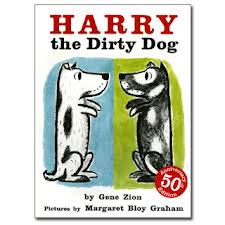
*I really can’t. It seems I was always reading, always devouring stories. I do remember my first favorite dog book, though.  It was HARRY THE DIRTY DOG by Gene Zion.  My kids love it, too!

AOB: HARRY THE DIRTY DOG was a favorite of mine, too! Click here to find out more information about you and/or your books?

Thank you for joining us today at Best Dog Books, Jennifer Ziegler!


For other great books about dogs, check out 101 Best Dog Books for Kids.

For published authors and unpublished authors, check out our writing contests.