I first started thinking about “dog books” when I was working on my MFA for Vermont College of Fine Arts. I was working on two different fictional pieces in which a dog was central to the story. I was asked, more than once, if the dog was going to die. It was a reasonable question; after all, haven’t we all had our hearts broken over the death of a beloved dog character? As Wallace Wallace points out in Gordon Korman’s novel, NO MORE DEAD DOGS, “the dog always dies. Go to the library and pick out a book with an award sticker and a dog on the cover. Trust me, that dog is going down.” I started thinking about the fictional deaths of trusty dogs—and also, about the stories where the pet dog doesn’t die.
As I began to read more stories featuring dog characters, I realized how fully dog characters can enrich our stories, regardless of their fates. They are far more than a furry prop.
Although dogs appear in stories for readers of all ages, I personally think middle grade literature is the sweet spot. These characters—and readers of these books—are often at a threshold, nearing the end of childhood and peeking around the corner at adulthood. A loyal dog can be the perfect companion to accompany a character as they venture out into the world for the first time. He can be a protector, providing a sense of security; and yet a dog also needs care and attention. He needs the child owner as much as the child needs the dog. A child-pet bond has the potential for being the first significant, mutual relationship in a person’s life.
Here are some of the ways a secondary dog character can enrich a story:
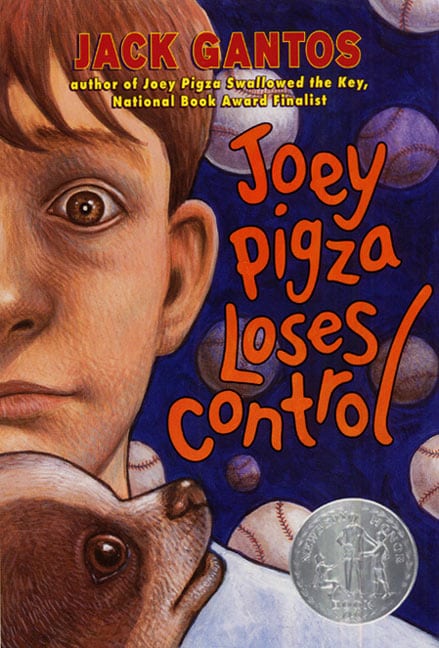
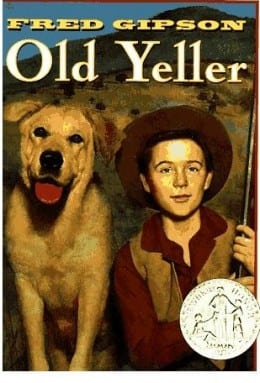
AN ALLY FOR THE MAIN CHARACTER: Quite simply, a dog is a friend. If a main character is isolated for some reason—whether it’s for geographic or emotional reasons—the dog sidekick is someone for the main character to talk to and explore with. Because dogs are familiar, readers easily accept dog characters without a lot of extensive backstory required. Simply assign a breed, and readers will already feel as if they have some understanding of this who this dog will be. For instance, Joey Pigza’s Chihuahua, Pablo, is a very different dog than scrappy Old Yeller.
EMOTIONAL THERMOSTAT: Often times a main character will project his/her feelings on to that of the loyal canine sidekick. As a story progresses, readers can gain a deeper understanding of exactly how the main character feels in certain situations through various interactions and conversations with the dog companion.
SETTING: Dogs need contact with the outside world. This necessary stepping out allows the setting to be revealed and explored in an organic and relevant manner. Whether it’s the wilderness of the Ozark Mountains or Wyoming; a small town in Florida or a suburb of Pittsburgh, a dog is going to lead his child owner out and about.
PLOT: A pet dog can serve as an authentically motivating factor for the main character, or as an impetus for plot events. Because dogs are sentient beings, a dog takes action. He often leads a human character into a new and unexpected situation. Although intelligent and capable, dogs are also prone to ridiculous exploits: rolling in messy substances, chasing other animals, and other impulsive misbehaviors. This mischievousness helps to make them intrinsically interesting and entertaining.
THEME: Due to the intense bond forged between a child and his or her dog, this relationship can effectively force a character into making some tough decisions. Through the experiences they share, lessons may be learned. Characters may be forced to cross that threshold into adulthood. A dog is an ideal companion when a character comes of age.
Which leads me back to that initial question: Why do so many dogs die in stories for middle grade readers? Well, it seems to me, in many ways a dog can serve as a symbol for childhood. Dogs are often loyal and loving, trusting and forgiving, and blessed with a joyful, enthusiastic spontaneity that leads to a willingness to explore, make noise, and get messy…all traits that inherently childlike.
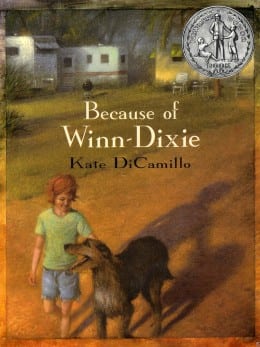
So, when a main character crosses that line, leaving childhood behind, the dog passes away. In the classic boy and his dog story, OLD YELLER by Fred Gipson, once Travis proves that he is capable of taking care of his family during his father’s long absence, then he must say goodbye to the mangy old mutt that helped him to do so. But Opal, in BECAUSE OF WINN-DIXIE by Kate DiCamillo, has been forced to act in a grown up manner too early due to her mother’s abandonment. What she needs most is for her father to take care of her a little longer. And so, Winn-Dixie lives on, even after his worrisome disappearance.
Loved in spite of their faults, dog characters can serve as a kind of touchstone for children. They are living, panting proof that we are lovable, even when we make mistakes.
BIO:
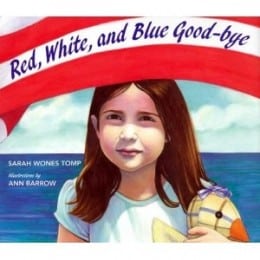
Sarah Tomp lives in San Diego California with her family, including Luna, a sweet black mutt. Her YA novel, MY BEST EVERYTHING will be published by Little, Brown Books for Young Readers in March 2015. She is also the author of a picture book, RED, WHITE AND BLUE GOOD-BYE (Walker and Co.). She has a MFA from VCFA. Please visit her at www.sarahtomp.com
Today I welcome Karen Stanton, my friend, neighbor, and daughters’ former school art teacher to Best Dog Books, a blog that features authors who have written a dog story for kids. We also have the luxury of learning about the art behind this delightful picture book because Karen is equally talented in illustrating as well.
What is the title of your book? Publisher, genre and targeted age group?
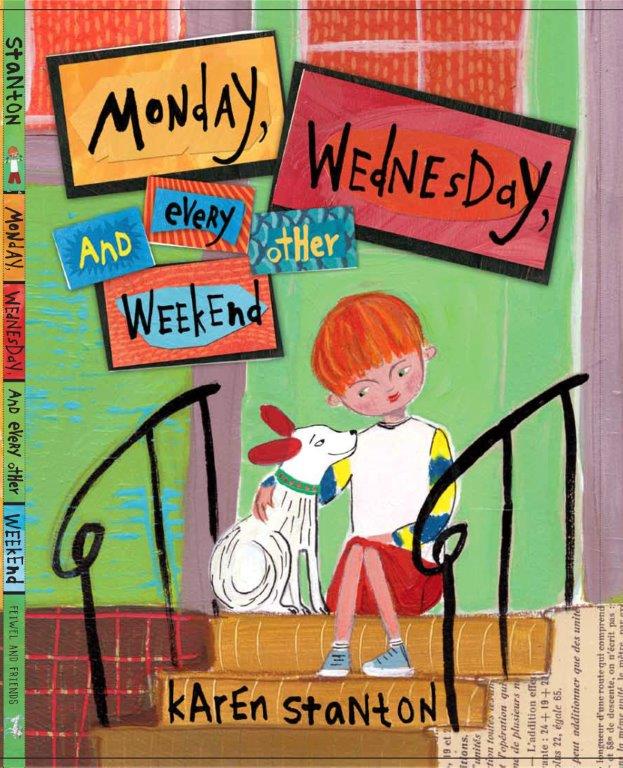
The title of my book is Monday, Wednesday and Every Other Weekend, a picture book for children ages 3-6. My publisher is Feiwel & Friends, an imprint of Macmillan Group. This is my third published picture book, but my first with Feiwel.
What is your story about?
My story is about a boy named Henry Cooper and his dog Pomegranate who live with Mama on Monday, Wednesday and every other weekend. On Tuesday, Thursday and every other weekend, they live two and a half blocks away with Papa. Henry finds comfort in both houses, but Pomegranate feels differently. He is the heart of the story.
How did you come up with the story idea?
All of my stories (at least the ones I have sold) seem to come from the same place. From my relationships. Often it is only a word or a feeling that plants the seed for the story. With Monday Wednesday, the inspiration came from my nephews Cooper and Henry. The story is about how a child (and his dog) find their bearings in the world after their lives change from divorce. My nephews went through their parents’ divorce when they were very young. I got the idea for the story in a particular moment after a day at the beach with my son and my nephews. The word that inspired the book, was a word that was missing from my nephew’s vocabulary that summer. The word was “home.” I find that good books usually make you feel something strongly; happiness, fear, wonder or even pain. Writers have to follow that feeling and look for the story. That’s what I tried to do with this book.
What kind of dog is featured in your story?
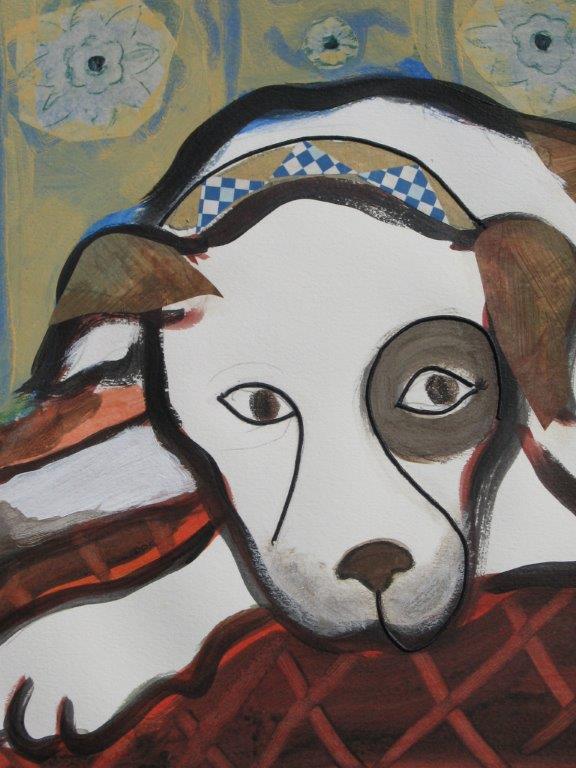
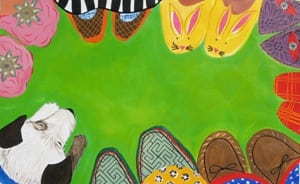
My brother and his wife had been competitive dog sled racers in Northern Michigan. They had 19 dogs at one time. So my nephews grew up with LOTS of dogs. The story of Henry Cooper is fiction of course. Nothing in the story resembles the real life of my nephews except for the emotional journey (the most important part of any story I think). Pomegranate is not a Huskie! He is a made up kind of dog. What dog has red ears? Of course, a dog named Pomegranate. The reason he has red ears and a black and white body is so that he can be easily spotted within the colorful spreads in the book. Pomegranate is inspired by a few dogs that I have known and loved.
1. My grand-dog Lido (a pit-bull mix) is a digger and an extremely loyal family dog.
2. Yudi (the main character of my first book Mr. K and Yudi) is a clever, run away Jack Russell Terrier.
3. My childhood dog Ginger was a West Highland White Terrier who slept in my bed and had lots of dreams. She was also a gifted escape artist.
4. Petra, my best friend’s Canaan dog, who has a collection of toys she doesn’t like to share.
Pomegranate is a combination of all those dogs. And he is critical to the story of Henry Cooper. I couldn’t have told the story without him.
What is it like being an author and illustrator? Did the story come first or the images of your characters?
Creating books for children is a really fun job. I love it. With this book, the words came first. Then I sketched out a dummy to imagine what images I could use to tell the story. Picture books are a marriage of image and words. They can’t be separated. I work back and forth to find the balance between the two. Usually there are way too many words to start. The pictures help to tell the story without so many words. Monday Wednesday and Every Other Weekend is my shortest book. It has about 400 words.
What is your step-by-step process from start to finish for illustrating a book? How long does it take you to create one book?
It can take years, unfortunately. I once heard Maurice Sendak say it took him 12 years from idea to finished book for “Where the Wild Things Are.” Hey, I’m not at all surprised. But assuming I have the story pretty solid and a rough dummy, that is what I use (along with a sample art and a link to my portfolio) to sell a book to a publisher.
Here are the steps after that:
1. Editing comments from editor. Refining the story and images. Getting them just right in this dummy form. I say it is like a soup that you need to simmer to get the right consistency and the right balance of flavors. It takes time and some good feedback from a good editor and art director.
2. The overall size of the book is confirmed and the art director sends me spreads with the text in the rough location from the dummy.
3. I work at a larger scale. Usually something like 165%. So I lay out my spreads on the prepared paper and start creating the art. My medium is acrylic paint and collage.
4. As I make progress, I send scans to ask for feedback and advice. I make changes as required for consistency. It took me 6 weeks of regular working days to finish all the art and the cover for Monday, Wednesday and Every Other Weekend.
5. I sent all the finished art to the art director a little less than a year before the actual pub date of February 2014.
How do you come up with the images you create? How much freedom do you have? What role does the publisher’s art director have?
I think it’s different with each publisher. Both Children’s Golden Books and Feiwel and Friends hired me because they liked my colorful style. I expected to be visually edited more than I was (I had a pink road and a lime green house). But the art directors in both cases were very open to my style. Most of their feedback was to help make the pictures read well. They pointed out places where the main character was looking too small or lost. April Ward was my art director/ book designer for Monday Wednesday and she did a great job designing the cover and the jacket flaps. I can tell she had a lot of fun. And so did I.
How much research goes into the dogs that you create? How do you find your dog models?
For Pomegranate I didn’t use a dog model. My style is not so realistic that I needed that. But with my first book, I did use a model. It took me awhile to find the right dog. The real dog who inspired the story was no longer living, and he wasn’t exactly like the fictional dog I had envisioned for the book. I
noticed a photo of a dog behind the counter at Dick Blick when I was buying paint for the book art. It was the manager’s little Jack Russell, Boris. He was the perfect dog. I brought the dummy out to their property in Contra Costa and her dog posed in every position I needed for the art. I took pictures. Later I used my friend Susan’s Jack Russell Monty to do some extra poses. It was really helpful to get to know the dog’s physique.
Writers constantly revise their work before it gets published, how many revisions do you do on average before your art is finalized?
Lots. And lots. With the writing and the dummy (sketch art). Less revisions with the final art. The end of this story was the hardest thing to nail down. I knew the emotional end of the story and the action end of the story. But finding the words and images to tell that ending took a lot of work. Jean Feiwel, the publisher and my editor Liz Szabla were very helpful. Writing about divorce from the point of view of a young child is a sensitive thing. Jean felt strongly that some of my early drafts were too painful, too sad. I didn’t always agree. But we all agreed that the story is about a child whose parents separate, love him and stay separated. The trick was to show it and say it without too many words. And to end the story in a satisfying way. I think the solution we came up with is a good one. I am really happy with the end of the book.
Pomegranate is the most important character in the story. He carries the emotional and the action arcs in the book. I always felt that Pomegranate was the heart, the longing for “home” in the story. And that his actions are what propels the story forward. He helped me tell a story of a young boy learning to redefine “home” after his parents’ divorce. It’s painful, but it is life. Kids have to move from one house to another. So do dogs. And it’s not an easy adjustment. You have to read the book to get to know Pomegranate. He’s a very good dog.
What do you enjoy most about creating illustrated books?
Color. I love paint and I love collage. It shows Karen. I love all the vibrant colors!
What is your biggest challenge creating your art? And how do you overcome it?
I don’t really like painting people. I prefer fish, birds, dogs, architecture, flowers, trees. Making Henry Cooper look like the same boy in every spread, and making him always looks the same age too, was hard for me. I didn’t always enjoy that. My next book is about fish.
What kind of training does one generally need to illustrate books? How did you break into children’s books?
I had a very unusual road to writing and illustrating books for children. I went to school for architecture and practiced for a few years before I finally admitted that I didn’t really like it. I took a few classes at UC Berkeley Extension (one was with my friend Marissa Moss) and learned about children’s books. Not too many years later, I sold my first book to Children’s Golden Books. I taught Children’s Book Writing and Illustration at City College San Francisco for several years until I moved to Spain where I am living now.
What advice would you give young people (or adults!) interested in a career as an illustrator?
1. Perseverance. Lots of people say they want to make a book, but very few people have the follow through to keep going to the finish line. It requires facing rejection. Failure is a requirement. It’s just part of the journey.
2. Look at a lot of great work. Use Pinterest or some other method for organizing your inspirations. Read a lot.
3. Put in your time. Or as my friend Naomi Epel advises in her book Observation Deck, “Ribe tuchus.” Keep your butt in the chair.
For more information about Karen Stanton or a look at her art, please click here.
Thanks for joining us at Best Dog Books and good luck with the launch of your picture book, Monday, Wednesday and Every Other Weekend.
Have you ever thought about what breed of dog you would be if you were a dog? The people over at DogVacay asked this question for Doppelganger (February 2 – 8) Week. Not just what kind of dog do you look like, but what type of dog best matches your personality.
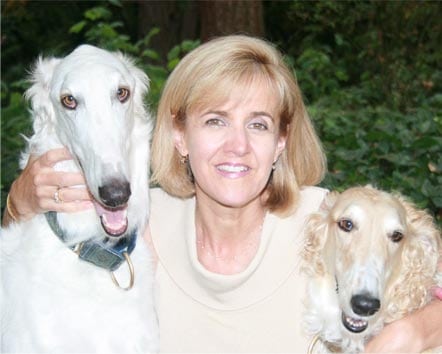
The author with her borzoi, Zar and Zola, by Turner Photography
Many years ago while I was walking my lean, athletic white and champagne colored borzoi Dasha through Rittenhouse Square in Philadelphia in a long ¾ pale golden dress with long locks pulled back behind a head band, I passed a couple who commented on how much Dasha resembled me, and then another person made a similar remark, and then another said the same thing to me, pointing at me, and then at Dasha, and then back at me with big eyes and a friendly smile. As elegant as Dasha was, I should have been flattered, but felt a bit insulted because I was sure these comments stemmed from the long noses we had in common: my least favorite feature!
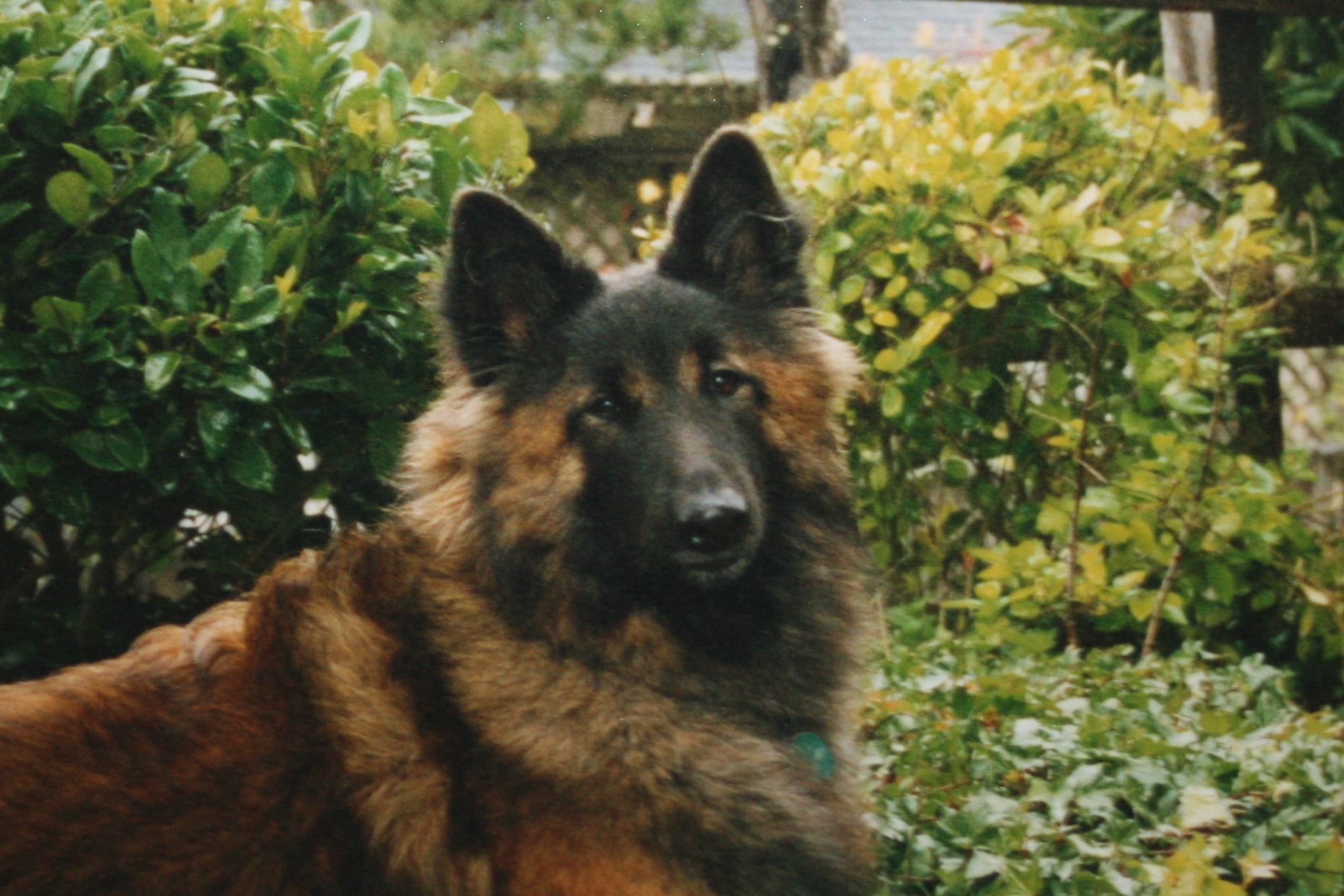
Belgian Tervuren Sheepdog – Chaz
As for personality (check out the details by clicking here), I think I have moments from each of the seven dog groups:
Pastoral pups like Collies, Sheepdogs, Heelers, and Corgis are highly devoted, encouraging, patient, and willing to go the extra mile.
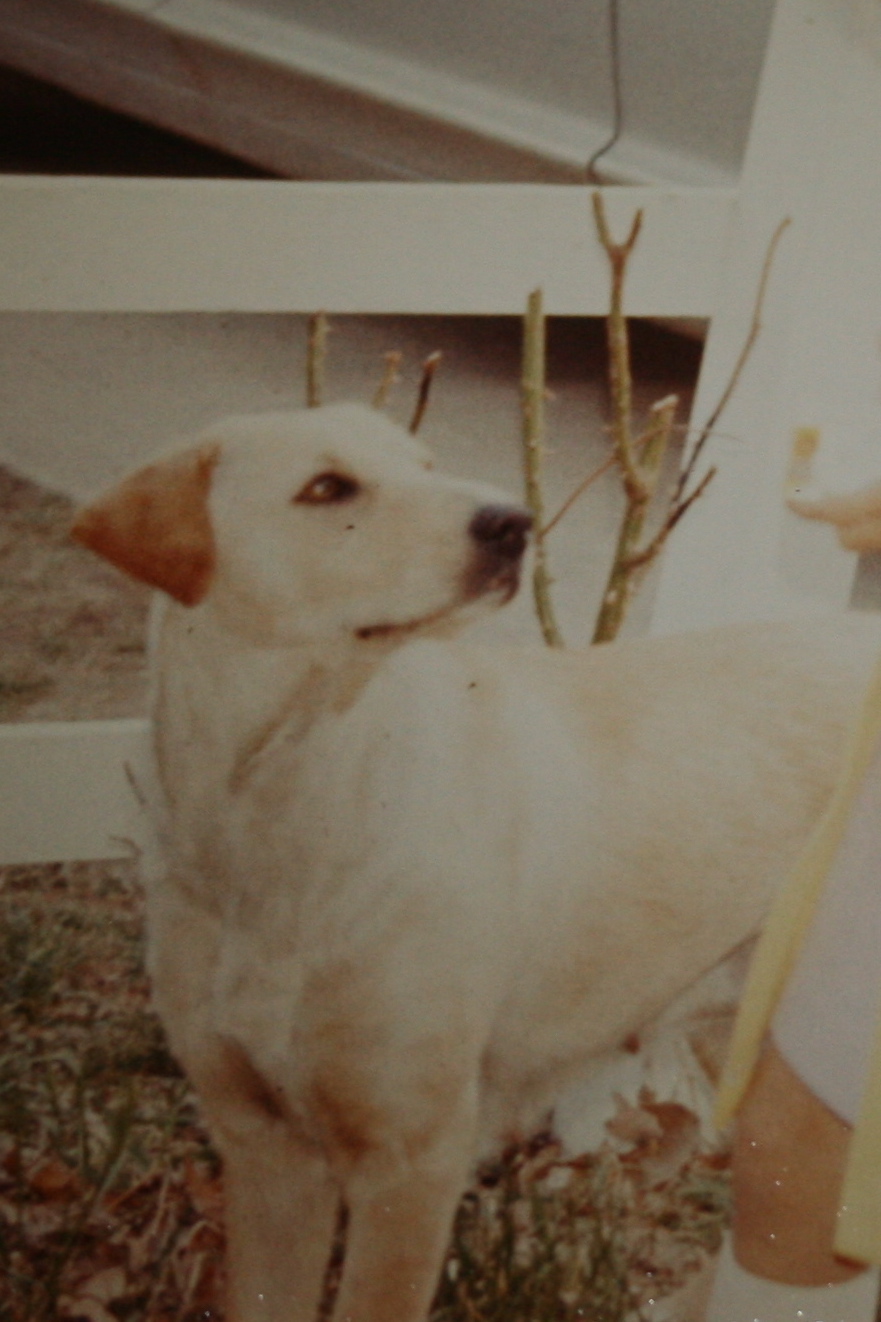
Yellow Labrador Retriever – Emma
Sporting/Gun pups like Labradors, Retrievers, Spaniels, and Setters tend to be easy-going and adaptable to different social situations.
Hound pups like Beagles, Bassett Hounds, Greyhounds, and Borzoi are unlikely to be bogged down by stress and anxiety.
Terrier pups like Jack Russells, Bull Terriers, and Staffordshire Bull Terriers are across the board the “Jack of all Trades” and fun-loving.
Utility/non-sporting pups like Bulldogs, Shar-Peis, Chow Chows, and Poodles work hard, are meticulous in their decisions, and are extroverted.
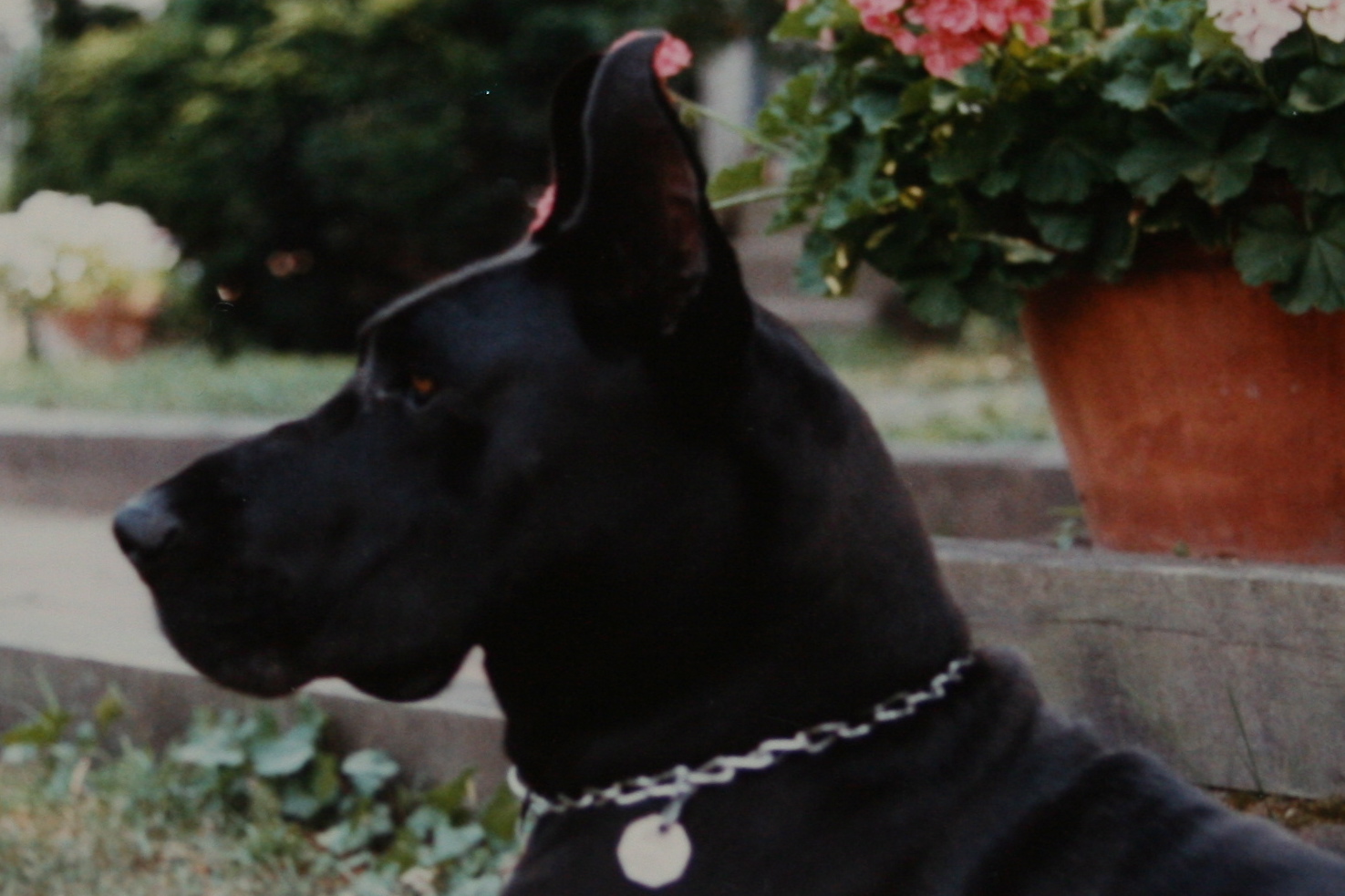
Great Dane – Sheena
Toy pups like Chihuahuas, Yorkies, and Pugs are highly confident, aware of their needs, open to fun new experiences and they don’t back down easily.
Working pups like Great Danes, Rottweilers, and Boxers enjoy new experiences and approach them with limitless exuberance.
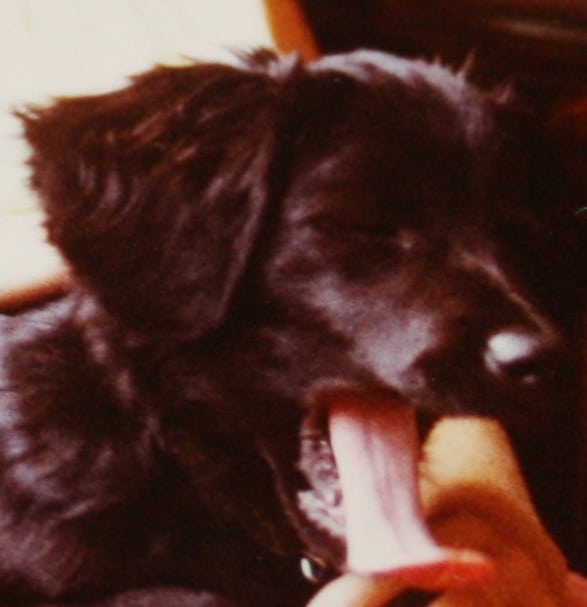
Spaniel – Emma
If I had to pick a breed for the reasons described above, I’d be a:
Today I welcome Jill Santopolo, author-editor extraordinnaire, to Best Dog Books, a blog that features interviews with authors who’ve written a canine story for kids or young adults.
AOB: What is the title of your book? Pub date and publisher? Genre? Targeted age group? Illustrator?
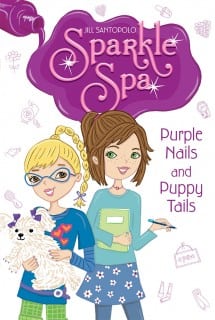
My book is called PURPLE NAILS AND PUPPY TAILS. Its pub date is February 11, 2014 and it’s published by Aladdin, an imprint of Simon & Schuster. PURPLE NAILS AND PUPPY TAILS is the second in a realistic chapter book series called The Sparkle Spa targeted at kids ages 6-9. The jacket artwork is done by Cathy Mingus.
AOB: Who is your key dog character and what kind of dog is he/she? Tell us a little more about him/her.
* There are many dogs in PURPLE NAILS AND PUPPY TAILS, but the first one we meet is a dog model named Sadie. She’s a tiny Maltese with long hair who is hired to be the Spokesdog for the Paws for Love adoption campaign.
AOB: In 70 words or less, provide a succinct plot description of your story.
* Aly and Brooke run the Sparkle Spa, a nail salon they started in the back room of their mom’s salon, True Colors. One of the True Colors customers has a dog named Sadie, who is a model, and Aly and Brooke give her a pet-icure to prepare her for an important photo shoot. Because of that, they meet a ton of shelter dogs who they decide should have a chance to look glamorous too. The girls and their friends give the dogs baths, pet-icures and new outfits so they look their best for Pet Adoption Day. (But, of course, it’s not that easy…)
Links to reviews or blurbs you wish to share:
Here are some reviews for the first book in the Sparkle Spa series that mention Purple Nails and Puppy Tails too:
* In the first book in the Sparkle Spa series, All That Glitters, I created a character named Mrs. Franklin (who’s actually named after my grandmother) who had a dog named Sadie (named after my parents’ dog) who was a dog model. My editor, Karen, thought that having a character who was a dog model was hilarious, and asked if Sadie could have a bigger role in the second book in the series. When Karen and I were brainstorming ideas, we came up with the concept of the girls trying to give Sadie a pet-icure, and everything fell into place from there.
AOB: What was the biggest challenge you had writing your story? How did you overcome it?
* I’d never polished a dog’s nails before, so I wasn’t quite sure how a dog would respond to that. I ended up buying purple puppy polish and borrowed my parents’ dog (the real Sadie) and convinced my sister to help me polish her nails. The real Sadie was not a fan of getting her nails polished, so I only did one paw, but it gave me enough experience to write about what it was like.
AOB: What other YA/MG books have you written? Do any of them feature a key dog character? If so, which ones? AOB: What are these stories about?
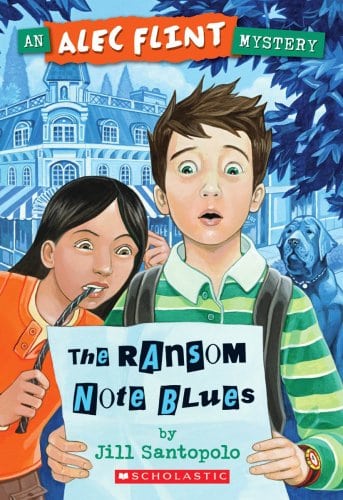
* I’ve written two Alec Flint Mysteries, The Nina, The Pinta and the Vanishing Treasure and The Ransom Note Blues. Neither one of those books features a key dog character, but Alec talks about dogs a lot because he’s afraid of them. I’ve also written Summer Love, which is the first in the Follow Your Heart series and will be out in May of 2014. That book features a dog named Gonzo who barks at cars and helps his owner meet the main character in the book.
AOB: What kind of story can we expect next from you? Is it about a dog? If so, what is it about?
* Right now I’m working on more books in the Sparkle Spa series, and those books will always have at least a few dogs in them. I’m also working on the second Follow Your Heart book, called Love on the Lifts, which has a dog in the outline, though I haven’t written about him yet in the manuscript.
AOB: Can you remember the first book that made an impact on you? And why?
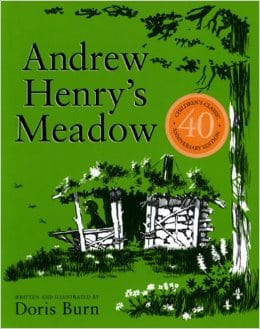
* The first book I remember loving to pieces is a picture book called Andrew Henry’s Meadow by Doris Burn. It’s about a boy named Andrew Henry who runs away and builds a house just for him filled with all the things he loves to do. Then the other kids in his town run away to his meadow and he builds them each their own special house based on what they love to do best. I think what really touched me about that book is that there was a place where the kids got to do what they were passionate about and it was not just accepted but celebrated. (Also, there was a wonderful dog character in there too, named Sam.)
AOB: Where can readers go to find out more information about you and/or your books?
* The best place to find information about my books and me is my website. I have an author page on facebook that has quite a bit of info on it as well.
Today I welcome Natalie Standiford to Best Dog Books, a blog that features interviews with authors who’ve written a canine story for kids or young adults.
AOB: What is the title of your book? Pub date and publisher? Genre? Targeted age group? Illustrator?
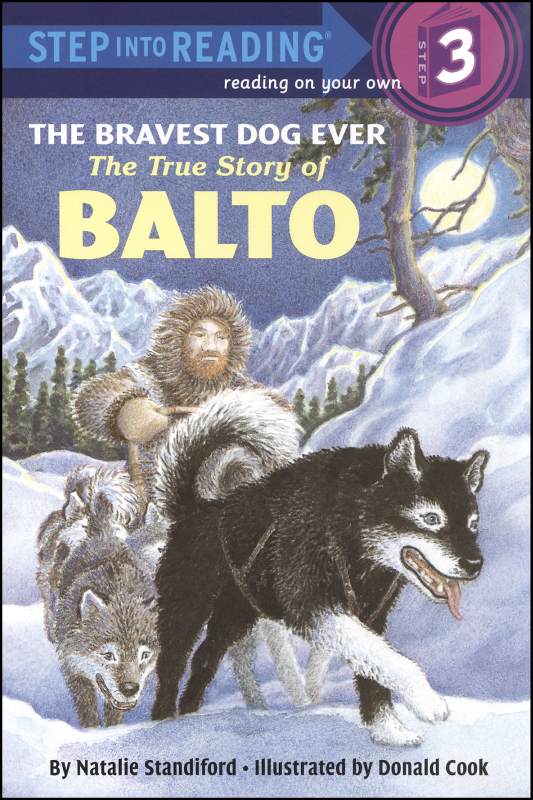
The Bravest Dog Ever: The True Story of Balto
Random House Step into Reading 1989
Illustrated by Donald Cook
Nonfiction, easy reader
Ages 5-8
AOB: Who is your key dog character(s) and what kind of dog is he/she? Feel free to list as many different breeds or mixes as necessary. Tell us a little more about him/her.
*Balto is a Siberian Husky who works as a sled dog in Alaska in 1925. He’s a lead dog, brave and very smart. He works for a driver named Gunnar Kassen at a gold-mining camp.
AOB: In 70 words or less, provide a succinct plot description of your story.
*A diphtheria epidemic breaks out in Nome, Alaska, in 1925. The town needs medicine, but a blizzard keeps trains and planes from reaching Nome. A dogsled relay is organized to deliver the medicine. Balto, a lead dog, braves ice, danger, and blinding snow to lead his team through the terrible storm in time to get the medicine to Nome and save the sick children. He’s a hero!
AOB: What inspired you to write this story?
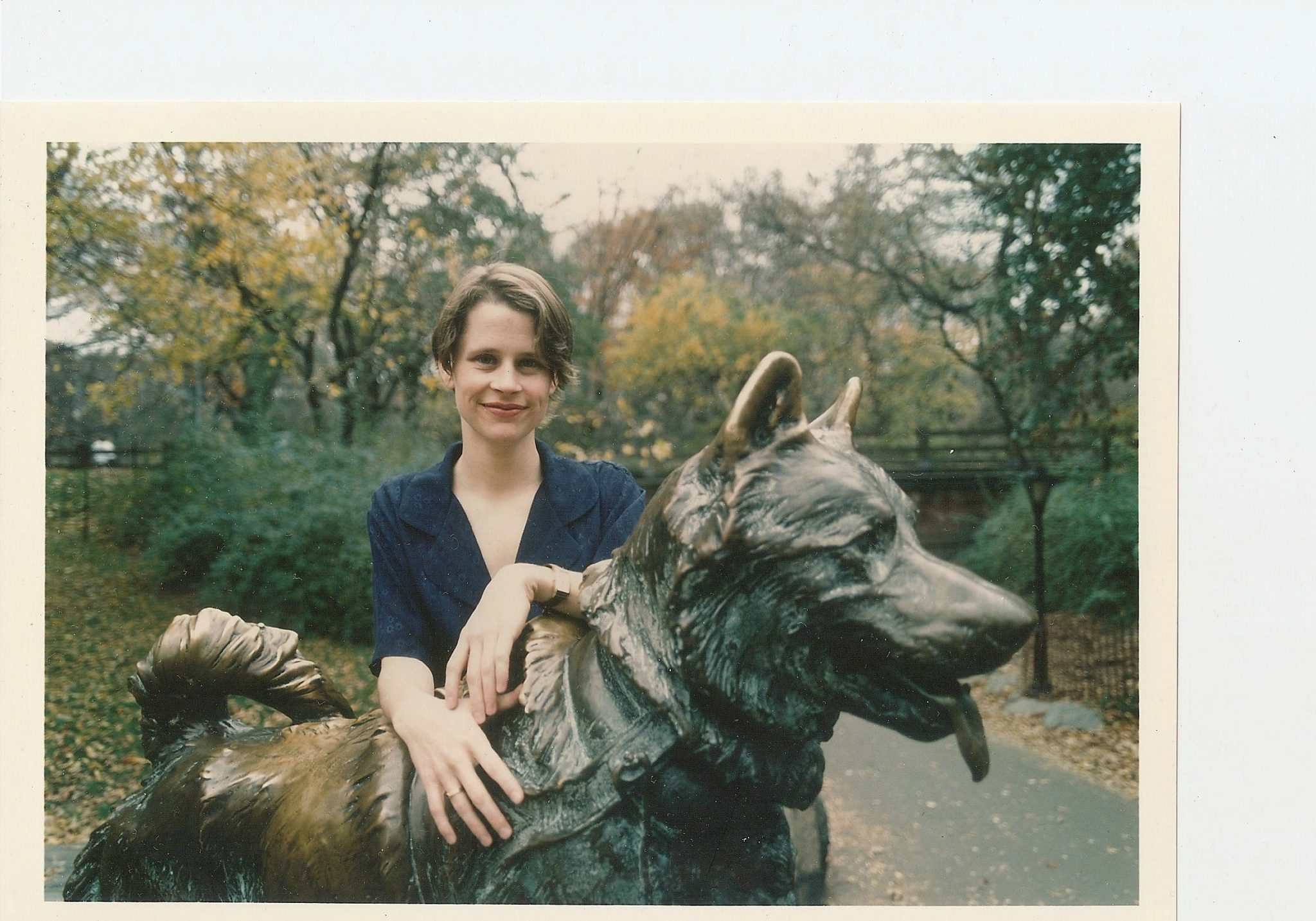
*My editor, Jane O’Connor, asked me to write the story. She grew up in New York City and played on the statue of Balto in Central Park, and was curious to know the story behind it. So I agreed to write it.
The author and Balto
AOB: What was the biggest challenge you had writing your story? How did you overcome it?
*The biggest challenge was finding information. The book is nonfiction and the story takes place a long time ago. My main source was the New York Times—I found old articles on microfiche (this was in the 1980s, before the Internet) that followed the serum run. There wasn’t much information besides that, and most of the people who remembered the run had died by the time I began researching the story.
AOB: What other YA/MG books have you written? Do any of them feature a key dog character? If so, which ones?
What are these stories about?
*I wrote a middle grade series in the early 1990s called Space Dog and Roy, about a dog from outer space who crash-lands in a boy’s back yard. My other middle grade books include The Secret Tree and the upcoming Switched at Birthday and The 39 Clues: Countdown. My YA books are How to Say Goodbye in Robot, Confessions of the Sullivan Sisters, and The Boy on the Bridge, which is set in Russia.
AOB: What kind of story can we expect next from you? Is it about a dog? If so, what is it about?
*My next middle grade book is called Switched at Birthday and it’s coming out in March 2014. It’s not about a dog but a dog does have a brief cameo. It’s about two 8th grade girls, dorky Lavender and popular Scarlet, who have the same birthday. They wake up the morning after their birthday to find, to their horror, that they’ve switched bodies. It’s sort of like Freaky Friday meets Mean Girls.
AOB: What else would you like us to know about you or your story?
*One of Donald Cook’s illustrations from The Bravest Dog Ever was used on the cover of the Winter 2006 issue of The Paris Review, which included a story by T.C. Boyle called “Balto.”
AOB: Can you remember the first book that made an impact on you? And why?
Little Bear by Else Holmelund Minarik, illustrated by Maurice Sendak. It was so sweet and lovely, my favorite book when I was little, and it was an easy reader, like Balto. I always thought those I Can Read books were like poetry, and was proud that I was able to write books in that format when I grew up.
AOB: What advice would you give to aspiring writers?
*Allow yourself to write a messy first draft and push yourself all the way through to the end, no matter how terrible you think the story is. You can (and will) rewrite and edit it later, many times, but you need to have something on paper to work with first. Think of yourself as a sculptor: Writing the first draft is creating the clay. Once you have clay to work with, you can begin to shape it into a work of art.
AOB: Where can readers go to find out more information about you and/or your books?

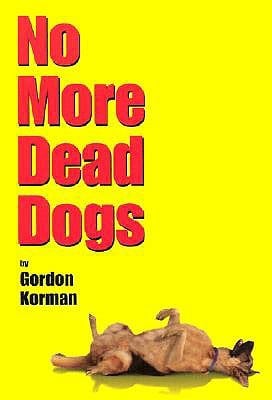 I first started thinking about “dog books” when I was working on my MFA for Vermont College of Fine Arts. I was working on two different fictional pieces in which a dog was central to the story. I was asked, more than once, if the dog was going to die. It was a reasonable question; after all, haven’t we all had our hearts broken over the death of a beloved dog character? As Wallace Wallace points out in Gordon Korman’s novel, NO MORE DEAD DOGS, “the dog always dies. Go to the library and pick out a book with an award sticker and a dog on the cover. Trust me, that dog is going down.” I started thinking about the fictional deaths of trusty dogs—and also, about the stories where the pet dog doesn’t die.
 Here are some of the ways a secondary dog character can enrich a story:
 EMOTIONAL THERMOSTAT: Often times a main character will project his/her feelings on to that of the loyal canine sidekick. As a story progresses, readers can gain a deeper understanding of exactly how the main character feels in certain situations through various interactions and conversations with the dog companion.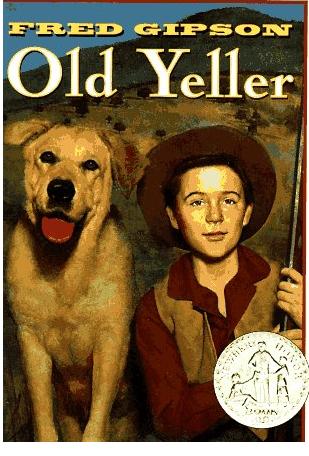
 PLOT: A pet dog can serve as an authentically motivating factor for the main character, or as an impetus for plot events. Because dogs are sentient beings, a dog takes action. He often leads a human character into a new and unexpected situation. Although intelligent and capable, dogs are also prone to ridiculous exploits: rolling in messy substances, chasing other animals, and other impulsive misbehaviors. This mischievousness helps to make them intrinsically interesting and entertaining.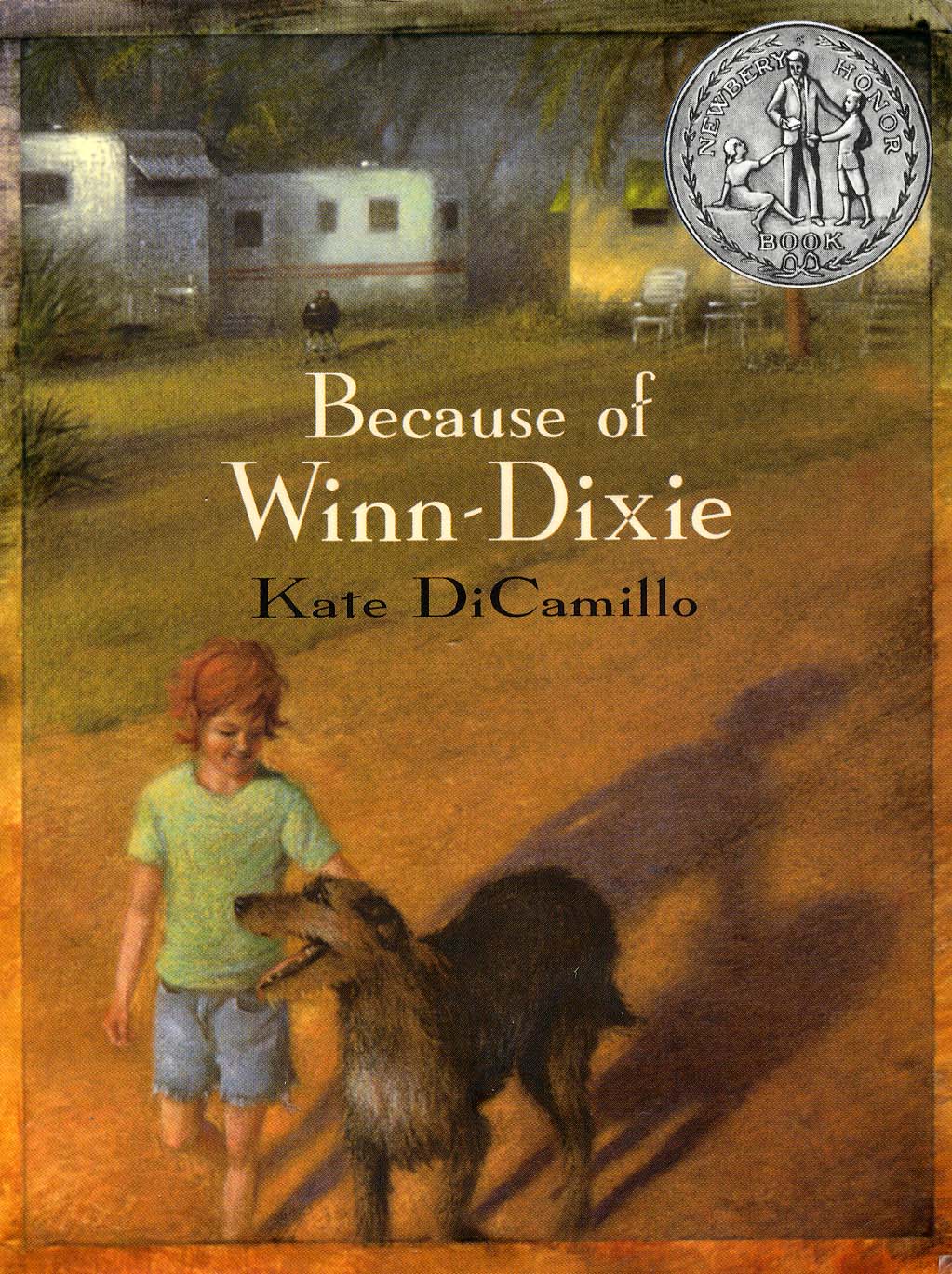
 THEME: Due to the intense bond forged between a child and his or her dog, this relationship can effectively force a character into making some tough decisions. Through the experiences they share, lessons may be learned. Characters may be forced to cross that threshold into adulthood. A dog is an ideal companion when a character comes of age.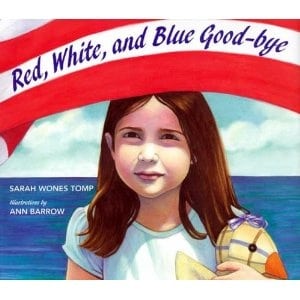
 Loved in spite of their faults, dog characters can serve as a kind of touchstone for children. They are living, panting proof that we are lovable, even when we make mistakes.